AZ vs. DZ Licence in Ontario: Which Licence Do You Need?
September 10, 2026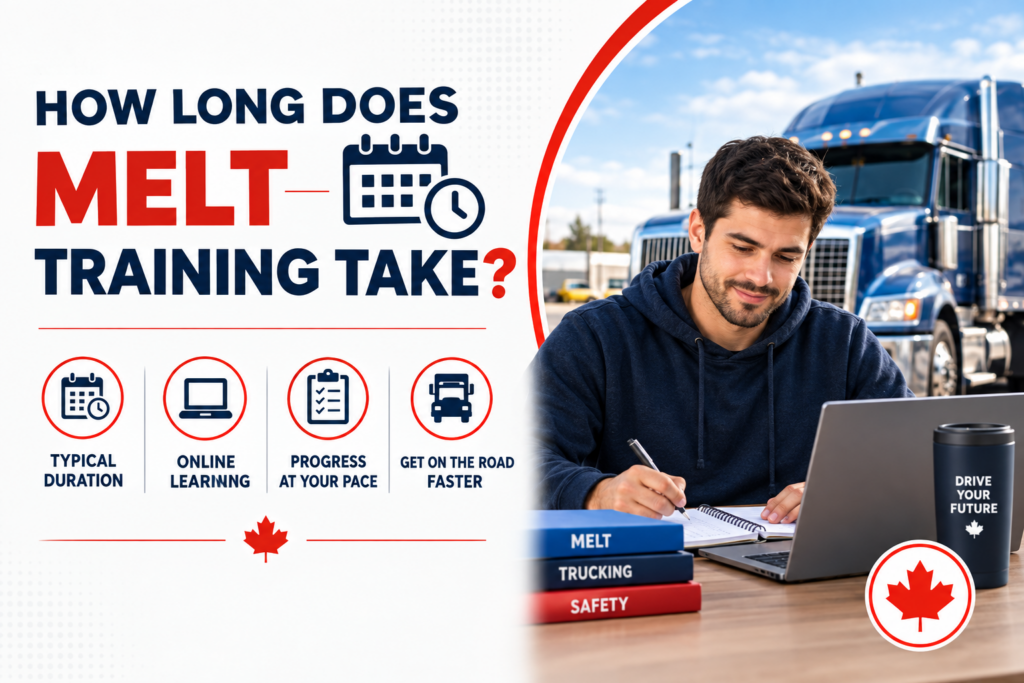
If you are planning to earn an AZ licence in Ontario, you have probably come across the term Mandatory Entry-Level Training, commonly known as MELT. One of the first questions most future truck drivers ask is, “How long does MELT training take?” Understanding the timeline can help you plan your schedule and prepare for the next step in your trucking career.
In Ontario, MELT is a mandatory training program for anyone applying for a Class A licence for the first time. The program is designed to ensure new commercial drivers have the knowledge and practical skills needed to operate tractor-trailers safely. The minimum training requirement is 103.5 hours, but the overall time needed to complete the program depends on the training schedule offered by the school you choose.
What Is MELT Training?
Mandatory Entry-Level Training is a government-approved program introduced to improve road safety and create consistent training standards for new commercial drivers. Every first-time Class A licence applicant in Ontario must complete this training before becoming eligible to take the provincial road test.
The program combines classroom learning, vehicle inspections, yard practice, and on-road driving experience. Rather than focusing only on passing the road test, MELT prepares students for the responsibilities they will face throughout their careers as professional truck drivers.
Read more : What Is the MELT Program and Why Is It Mandatory for Truck Drivers?
How Long Does MELT Training Usually Take?
Ontario requires every approved MELT program to include at least 103.5 hours of instruction. Most full-time training schools complete these hours over four to five weeks, while some programs extend to six or even eight weeks by offering additional driving practice beyond the minimum requirement.
Students who choose part-time training usually take longer to finish because classes are scheduled during evenings or weekends. The overall timeline depends on how frequently you attend classes and how your training provider organizes the program.
What Is Included in the 103.5 Hours?
The required training hours are divided into several learning components that help students develop both theoretical knowledge and practical driving skills.
Classroom instruction introduces students to commercial driving regulations, defensive driving techniques, hours of service rules, cargo securement, trip planning, and workplace safety. Students also learn about driver responsibilities and industry standards that apply to commercial transportation.
Practical training includes vehicle inspections, yard exercises, and behind-the-wheel driving. During these sessions, students learn how to perform pre-trip inspections, couple and uncouple trailers, reverse safely, park accurately, and operate a tractor-trailer on public roads under the supervision of experienced instructors.
What Factors Can Affect the Training Timeline?
Although the minimum training hours remain the same across Ontario, several factors can influence how long it takes to complete the program.
The first factor is whether you choose a full-time or part-time schedule. Full-time students usually complete their training much sooner because they attend classes throughout the week. Part-time students often require additional weeks since they train only on selected days.
Another factor is the training school’s curriculum. Some truck driving schools provide only the minimum hours required by Ontario regulations, while others include extra practice sessions to help students build confidence before the road test. Additional driving experience may increase the overall length of the program, but it often provides better preparation for real-world driving.
Your personal learning pace can also influence your progress. Some students quickly become comfortable operating a commercial vehicle, while others benefit from additional instruction before they feel fully prepared.
Can MELT Training Be Completed Faster?
Many students hope to complete their training as quickly as possible so they can begin working sooner. While intensive full-time programs offer the shortest timeline, there is no way to reduce the minimum training hours required by Ontario.
Approved truck driving schools must follow the provincial training standards, meaning every student must complete the required instruction before becoming eligible for the road test. Instead of focusing only on speed, students should concentrate on developing the knowledge and driving skills needed to operate commercial vehicles safely and confidently.
What Happens After MELT Training?
Completing MELT training is a major milestone, but it is not the final step in obtaining your AZ licence.
After successfully finishing the program, you must pass the Ontario Class A road test. During the examination, you will demonstrate your ability to inspect the vehicle, control the tractor-trailer safely, perform backing manoeuvres, and follow traffic laws in different driving situations.
Once you pass the road test, you receive your AZ licence and become eligible to apply for commercial truck driving positions across Ontario and Canada.
How Can You Get the Most from Your Training?
Making the most of your MELT program begins with choosing a reputable truck driving school that provides experienced instructors and modern equipment. Attending every class, asking questions, and taking advantage of every practical driving opportunity will help you build confidence throughout the course.
It is also helpful to review classroom materials regularly and practice the inspection procedures taught during training. Developing good habits early will make the road test less stressful and prepare you for the daily responsibilities of a professional truck driver.
Remember that the purpose of MELT is not simply to help you earn a licence. It is designed to prepare you for a career where safety, responsibility, and professionalism are essential every day.
Is MELT Training Worth the Time?
Although completing more than one hundred hours of training requires commitment, the benefits extend far beyond passing a licensing examination.
MELT training helps students develop the practical skills and safety awareness needed to operate heavy commercial vehicles responsibly. Employers value graduates who have completed comprehensive training because they are better prepared to meet industry expectations from their first day on the job.
Investing several weeks in professional training can lead to a stable career with opportunities for growth, making the time commitment worthwhile for many aspiring truck drivers.
Final Thoughts
If you are wondering how long MELT training takes, the answer is that every first-time Class A licence applicant in Ontario must complete a minimum of 103.5 hours of approved instruction. Most full-time students finish the program in four to five weeks, while part-time schedules may take longer depending on class availability and personal commitments.
Although the training requires dedication, it provides the knowledge, practical experience, and confidence needed to begin a successful career in the trucking industry. By choosing a quality training provider and fully engaging in every stage of the program, you will be well prepared to earn your AZ licence and start your journey as a professional commercial driver. Contact us for more information
Durham Truck & Forklift Driving School Ltd is registered under the Ontario Career Colleges Act, 2005. We are one of the Durham region’s most experienced and respected transport driver training schools.