Why Is Forklift Counterbalance Training in Pickering Important?
February 24, 2026
Is Truck Driving a Good Career in Canada ?
March 23, 2026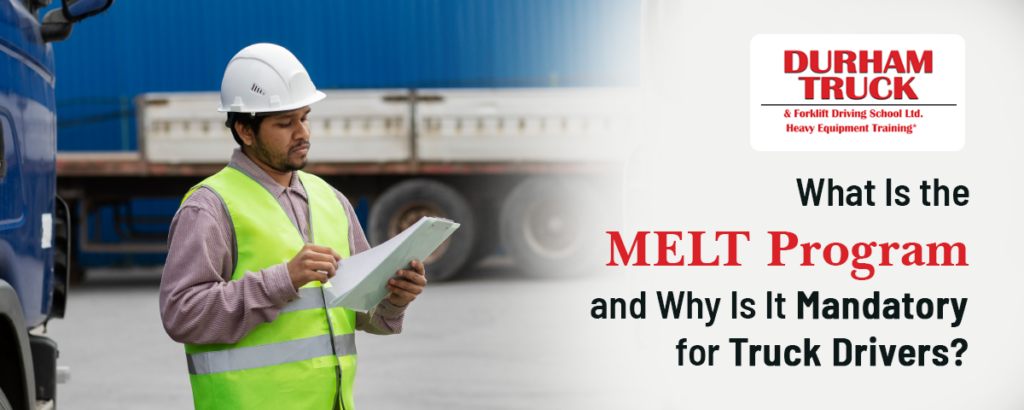
If you are considering a career as a professional truck driver in Ontario or anywhere across Canada, you have likely come across the term MELT. It stands for Mandatory Entry-Level Training, and it is one of the most important requirements you’ll need to fulfill before you can legally operate a commercial tractor-trailer on Canadian roads. Whether you are a newcomer to the industry or someone looking to upgrade your license, understanding MELT is the first step toward building a successful, long-term trucking career.
What Does MELT Stand For?
MELT stands for Mandatory Entry-Level Training. It is a provincially regulated training standard that was introduced to ensure every new commercial driver receives consistent, safety-focused education before attempting the road test required to obtain a Class A (AZ) license. The program was designed with one primary goal in mind: to make Canada’s roads safer by ensuring that large commercial vehicle operators are properly trained before they take the wheel.
Ontario was the first province in Canada to implement MELT, doing so in July 2017. Since then, provinces including Alberta, Saskatchewan, Manitoba, British Columbia, New Brunswick, Newfoundland, and Prince Edward Island have all adopted their own versions of the program. Today, MELT is a nationally recognized training standard that aligns with the National Safety Code 16 — a minimum training framework developed jointly by Canada’s provinces and territories in 2021.
Why Was MELT Introduced?
Before MELT existed, the truck driver training landscape in Ontario and across Canada was, frankly, inconsistent. Many “fly-by-night” trucking schools were promising students a lucrative career but failing to provide them with the practical knowledge and behind-the-wheel experience needed to operate safely. The result was an increase in preventable accidents involving large commercial vehicles.
Ontario’s Auditor General raised significant concerns about the quality of commercial driver training, and the Ministry of Transportation (MTO) responded by mandating standardized entry-level training. The idea was simple: if every new driver goes through the same rigorous, standardized curriculum — regardless of which school they attend — the entire industry becomes safer.
MELT was also introduced to address the growing complexity of the trucking profession. Modern trucks are equipped with advanced technology such as Electronic Logging Devices (ELDs), adaptive cruise control, and sophisticated air brake systems. New drivers need structured training to confidently handle these technologies as well as real-world challenges like highway driving, defensive maneuvers, and pre-trip inspections.
Who Needs to Complete the MELT Program?
In Ontario, the MELT program is mandatory for anyone seeking a full Class A (AZ) driver’s license with no restrictions. This means if you want to operate a tractor-trailer combination or any large commercial vehicle equipped with air brakes, you must complete MELT before you can book your road test.
To enroll in the MELT program in Ontario, applicants must meet the following eligibility requirements:
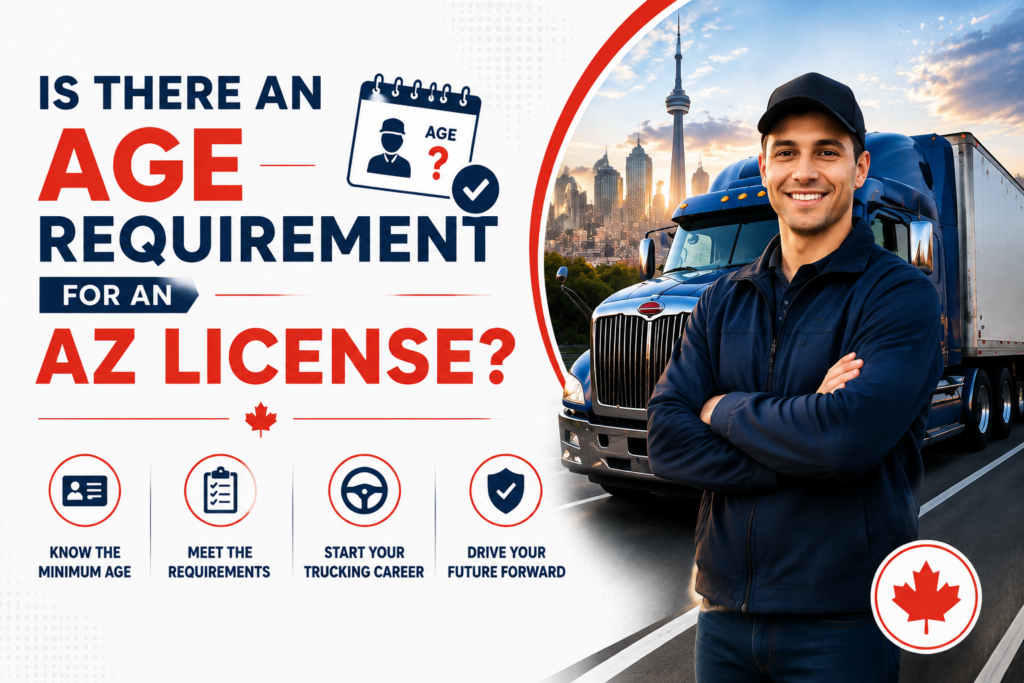
- Be at least 18 years of age
- Hold a valid Ontario Class G driver’s license
- Possess a reasonably clean driving record with few or no serious convictions
- Pass a vision test
- Be medically fit to operate a commercial vehicle (a Medical Report for Commercial Drivers is required)
- Have adequate English or French language proficiency to understand road signs and training materials
It is also worth noting that even if you already hold a DZ license, you are still required to complete MELT if you want to upgrade to an AZ license. The training requirements apply to all new AZ applicants, regardless of prior driving experience.
What Does the MELT Program Cover?
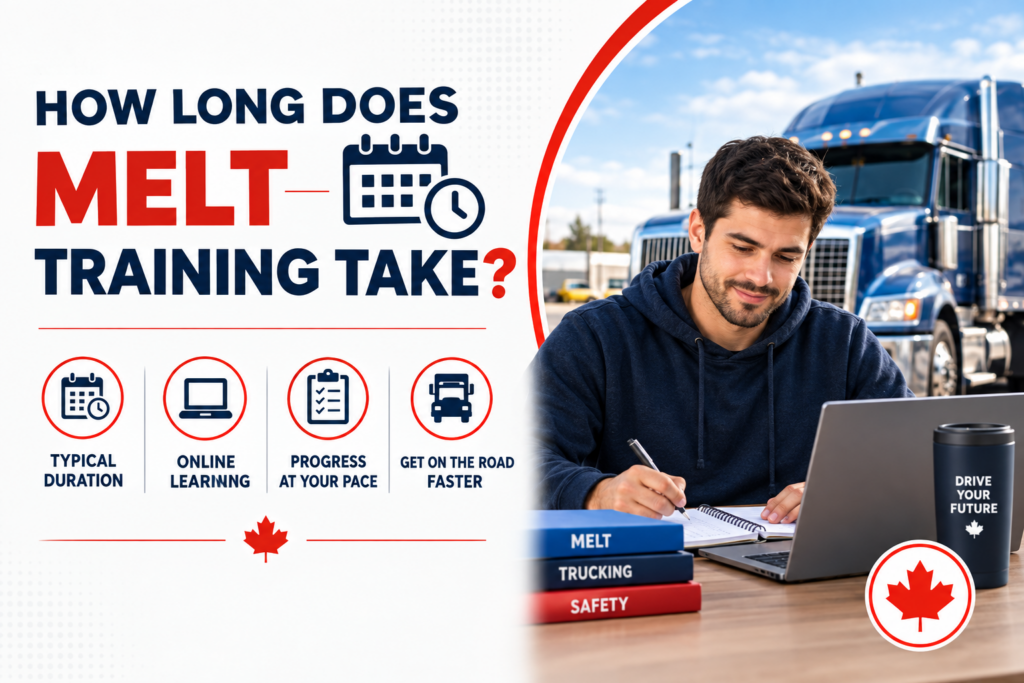
The MELT curriculum in Ontario consists of a minimum of 103.5 hours of instruction, structured across three core components: in-class theory, in-yard practical training, and in-cab on-road driving. These components are carefully designed to progress from foundational knowledge to real-world application.
1. In-Class Instruction (36.5 Hours)
The classroom portion of MELT covers the essential theoretical knowledge every commercial driver must possess. Topics include:
- Hours of Service regulations — legal limits on driving and mandatory rest periods
- Transportation of Dangerous Goods (TDG) — proper handling, documentation, and safety procedures
- Road signs, rules, and highway regulations
- Defensive driving techniques and hazard recognition
- Vehicle inspection procedures and the pre-trip inspection checklist
- Air brake systems — how they work, common issues, and maintenance checks
- Winter driving and navigating harsh Canadian weather conditions
Understanding Hours of Service rules and TDG regulations is critically important. for those who want to deepen their knowledge in this area.
2. In-Yard Training (17 Hours)
The in-yard component gives students hands-on practice in a controlled, off-road environment. This is where you develop the foundational driving skills needed before hitting the highway, including:
- Basic vehicle maneuvering — turning, reversing, and positioning
- Coupling and uncoupling trailers safely
- Pre-trip inspection demonstrations to the standard required during the Class A road test
- Air brake testing and the Z endorsement requirements
This stage is particularly valuable because it allows new drivers to build confidence and muscle memory in a lower-pressure setting before moving to live road conditions.
3. In-Cab On-Road Driving (50 Hours)
The largest segment of MELT is the on-road, in-cab component. This is where students apply everything they’ve learned in real driving conditions, under the supervision of an experienced, MTO-approved instructor. Key areas of focus include:
- Highway driving at speed, including merging, lane changes, and maintaining safe following distances
- Urban and rural driving with varying traffic patterns
- Backing maneuvers — straight-line, offset, and parallel
- Emergency and defensive procedures
- Navigating adverse weather conditions
The 50-hour in-cab requirement is the most demanding part of the program, but it is also the most valuable. Students who complete this component are significantly more prepared for both the Class A road test and the realities of professional truck driving.
The AZ License and MELT: How They Work Together
The MELT program is a prerequisite for obtaining a full Class A (AZ) license in Ontario. The “A” denotes proficiency in driving a large commercial truck or tractor-trailer, while the “Z” endorsement indicates certification in the use of air brakes or air-over-hydraulic brake systems. Both components are embedded within the MELT curriculum.
To obtain your AZ license, you must:
- Meet the eligibility criteria listed above
- Pass the written knowledge test at a DriveTest center
- Undergo a medical examination
- Enroll in and complete an MTO-approved MELT program
- Pass the Class A road test
MELT Across Canada: Province-by-Province Overview
While Ontario pioneered MELT in 2017, the program has since been adopted across Canada, with each province tailoring training hours to its specific needs:
- Ontario: 103.5 hours minimum (36.5 in-class, 17 in-yard, 50 in-cab)
- Saskatchewan: 121.5 hours (47 classroom, 17.5 in-yard, 57 in-cab), introduced March 2019
- Alberta: 113 hours + 8.5 hours Air Brake, introduced March 2019, with a training cost cap of $10,000
- British Columbia: 140 hours including air brakes, introduced October 2021
- New Brunswick: 112 hours, effective April 2024
- Newfoundland and Labrador: 112.5 hours, effective January 2024
- Prince Edward Island: Required as of August 2024
- Quebec: Mandatory approved training required as of December 15, 2025
The overarching principle across all provinces is the same: commercial truck drivers must complete structured, standardized training before receiving their Class 1 or Class A license.
Why Is MELT Mandatory? The Road Safety Argument
The numbers speak for themselves. Large commercial vehicles, including tractor-trailers, are among the most challenging to operate on public roads. They are heavier, longer, and require significantly more stopping distance than passenger vehicles. When operated by an undertrained driver, the consequences of an error can be catastrophic.
MELT addresses this risk by ensuring that every new driver:
- Understands the mechanics of the vehicle they’re operating, including air brake systems
- Can conduct thorough pre-trip inspections to identify mechanical issues before they cause accidents
- Is trained in defensive driving, enabling them to react appropriately in hazardous conditions
- Knows the legal regulations governing commercial driving, including hours of service and dangerous goods transport
- Has spent meaningful time behind the wheel in supervised conditions before driving unsupervised on highways
The trucking industry is also facing a serious talent shortage. According to industry projections, by 2030 the trucking and logistics sector could face over 40,000 job vacancies across Canada. MELT not only makes new drivers safer — it also prepares them for long, sustainable careers, reducing turnover and improving overall industry performance.
Choosing the Right MELT-Approved Training School
Not all truck driving schools are equal. When selecting a school to complete your MELT training, you should verify the following:
- The school must be listed as an MTO-approved MELT provider
- The school must be registered as a Private Career College under Ontario law
- The training fleet must meet Class A commercial standards and be properly maintained
- Instructors must have real commercial driving experience and MTO approval to teach MELT
- The school should offer clear scheduling, career guidance, and job placement support
Durham Truck & Forklift Driving School ticks every one of these boxes. With a long-standing reputation in the Canadian trucking industry, the school offers both full-time and part-time programs to suit your schedule. Full-time students can complete their training in as little as four weeks; part-time students have up to six months. Competitive tuition rates and financing options are also available, along with job placement assistance after graduation.
Beyond MELT and AZ licensing, Durham Truck also offers a broad range of complementary programs including:
- Class D Driver Training for non-commercial and specialty vehicle operators
- Forklift Certification Programs including counter-balance training for warehouse and industrial environments
- Transportation of Dangerous Goods Training to meet regulatory requirements for handling hazardous materials
- Hours of Service Training for compliance with federal driving regulations
This breadth of programs makes Durham Truck & Forklift Driving School a one-stop destination for all your commercial vehicle training needs.
The Career Opportunity Behind MELT
Completing the MELT program doesn’t just satisfy a legal requirement — it opens the door to one of Canada’s most in-demand and well-paying careers. Professional truck drivers enjoy:
- Consistent employment demand, since goods always need to be moved
- Competitive salaries, particularly for long-haul and specialized drivers
- Flexibility, including the option to work for major carriers or as an independent contractor
- Cross-border opportunities, especially with an AZ license that qualifies you for operations into the United States
The skills you gain through MELT — from vehicle inspection to defensive driving to air brake management — form the professional foundation of a long, successful trucking career.
Start Your MELT Journey at Durham Truck & Forklift Driving School
The MELT program is more than a government requirement — it’s an investment in your safety, your career, and your future. By completing your training at an accredited, experienced institution, you gain not just a license, but a comprehensive skill set that sets you apart in a competitive job market.
Durham Truck & Forklift Driving School has been preparing professional truck and forklift drivers for years, and their graduates are recognized and respected by Canadian trucking companies across the country. Whether you’re starting from scratch or upgrading your existing license, their team of experienced instructors is ready to help you succeed.
Ready to take the first step? Contact Durham Truck & Forklift Driving School today to learn more about MELT programs, enrollment requirements, schedules, and financing options. Your career on the road starts here.
Durham Truck & Forklift Driving School Ltd is registered under the Ontario Career Colleges Act, 2005. We are one of the Durham region’s most experienced and respected transport driver training schools.