
Benefits of Becoming a Truck Driver in Canada
May 27, 2026
What Are the Requirements for an AZ Licence in Ontario?
July 16, 2026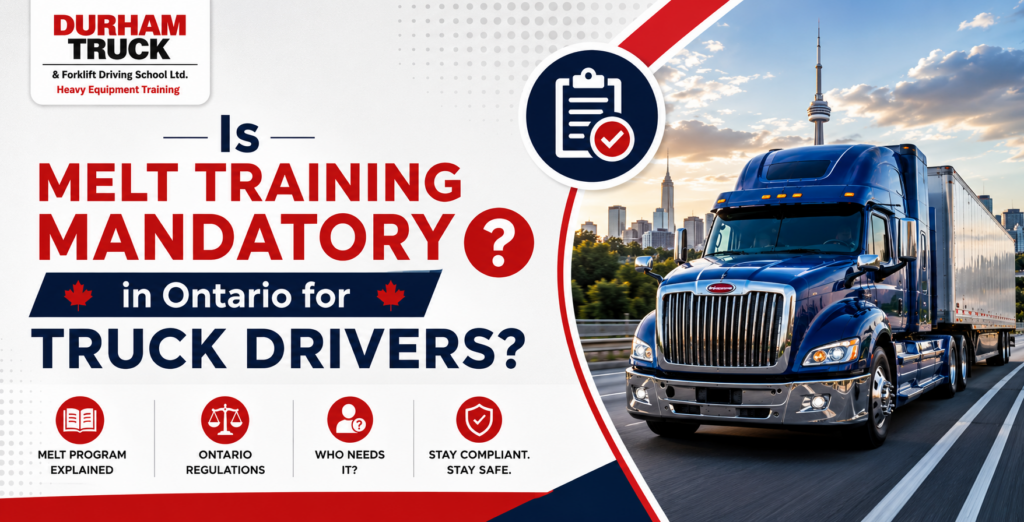
Many people planning a trucking career in Ontario ask one important question: is MELT training mandatory for truck drivers? The short answer is yes, but only for drivers applying for a new full Class A licence. Mandatory Entry-Level Training, also known as MELT, is a provincial requirement for people who want to operate tractor-trailers and other commercial vehicle combinations that require a Class A licence.
MELT was introduced to improve safety standards in the trucking industry. It ensures that new commercial drivers receive structured classroom learning, yard practice, and behind-the-wheel training before taking the Class A road test.
What Is MELT Training in Ontario?
MELT stands for Mandatory Entry-Level Training. It is a standardized commercial truck driver training program required by the Ontario government for new Class A licence applicants. The program provides students with the knowledge and practical skills needed to safely operate large commercial vehicles.
The training covers important areas such as vehicle inspections, air brakes, coupling and uncoupling trailers, defensive driving, backing procedures, cargo safety, and highway driving. It is designed to help students prepare for the Class A road test and the responsibilities of working as a professional truck driver.
Is MELT Training Mandatory in Ontario?
Yes, MELT training is mandatory in Ontario for individuals applying for a new full Class A commercial driver’s licence. A person cannot take the full Class A road test until they successfully complete an approved MELT program.
The rule applies to new Class A applicants, not necessarily every person who drives a truck. For example, a person driving a smaller commercial vehicle that only requires a Class D licence may not need Class A MELT training. However, anyone who wants to drive a tractor-trailer or operate a vehicle combination requiring a full Class A licence must complete the training.
Is MELT Required for an AZ Licence in Ontario?
Yes, MELT is generally required for a new AZ licence applicant in Ontario. An AZ licence usually refers to a Class A licence combined with the Z air-brake endorsement. This licence is commonly required for tractor-trailer drivers, long-haul truck drivers, local freight drivers, and many commercial transportation jobs.
The Class A portion of the licence allows drivers to operate qualifying tractor-trailer combinations. The Z endorsement allows drivers to operate vehicles with air brakes or air-over-hydraulic braking systems. Since many large commercial trucks use air brakes, the AZ licence is one of the most common licences in the Ontario trucking industry.
Who Needs MELT Training?
MELT training is required for people who are applying for a new full Class A licence. This includes people entering the trucking industry for the first time, drivers upgrading from a lower commercial licence class, and individuals who want to qualify for tractor-trailer driving jobs.
A driver with a DZ licence who wants to upgrade to a full Class A licence will normally need to complete MELT training. Holding a Class G, D, or DZ licence does not automatically remove the Class A MELT requirement.
Who Does Not Need MELT Training?
MELT is not required for every driver in Ontario. Drivers who already held a valid full Class A licence before the mandatory training rule came into effect generally do not need to complete MELT again. The program is mainly intended for new Class A applicants.
People applying for other licence classes may also not need Class A MELT. For example, a driver applying only for a Class D licence may have different training and testing requirements. However, employers may still request additional training, safety certifications, or driving assessments even if MELT is not legally required.
How Many Hours Is MELT Training in Ontario?
Ontario Class A MELT training requires a minimum of 103.5 hours of instruction. This includes classroom instruction, yard training, and in-cab driving experience.
The program generally includes 36.5 hours of classroom training, 17 hours of yard training, and 50 hours of in-cab training. The in-cab portion is especially important because it gives students practical experience operating a commercial truck under supervision.
The required hours help ensure that new drivers receive more than basic driving practice. Students learn how to handle large vehicles safely, complete inspections, back trailers, manage turns, and respond to real traffic conditions.
What Do Students Learn During MELT Training?
MELT training provides both theoretical knowledge and practical driving skills. Students learn how commercial trucks operate and how to manage the risks associated with driving large vehicles.
One major topic is the daily vehicle inspection. Truck drivers must inspect their vehicles before driving to identify safety problems involving brakes, tires, lights, steering components, coupling devices, and other important equipment. Students also learn how to complete inspections in an organized and professional manner.
Another important part of MELT training is air-brake knowledge. Air brakes are different from standard passenger vehicle braking systems, and commercial drivers must understand how to inspect and test them. Students learn about brake-system operation, warning signs, brake checks, and safe braking practices.
MELT also includes coupling and uncoupling procedures. This teaches drivers how to connect a tractor to a trailer safely and how to check the fifth wheel, kingpin, landing gear, electrical lines, and air hoses. Proper coupling procedures are essential because an improperly connected trailer can create a serious road hazard.
Backing skills are another key area of training. New drivers practise straight backing, positioning, trailer control, and other yard manoeuvres. Backing is a common challenge for new truck drivers, so structured practice helps students build confidence and accuracy.
Why Was MELT Introduced in Ontario?
Ontario introduced MELT to create a consistent training standard for new Class A truck drivers. Before mandatory training, the quality and length of truck driver education could vary significantly between schools and instructors.
The MELT requirement helps ensure that new drivers receive a minimum level of training before taking the Class A road test. This can improve safety for truck drivers, other road users, employers, and the transportation industry.
Commercial trucks are much larger and heavier than passenger vehicles. They require greater stopping distance, wider turning space, advanced backing skills, and careful attention to vehicle inspections. MELT training gives new drivers the foundation needed to handle these responsibilities.
Read more : What Is MELT Training and Why Is It Mandatory?
Can You Take the Class A Road Test Without MELT?
No, a new Class A applicant cannot take the Ontario Class A road test without completing approved MELT training. The training requirement must be completed before the applicant becomes eligible for the road test.
This rule is important for anyone planning their trucking career. It means that passing the written knowledge test alone is not enough to move directly to the full Class A road test. Applicants must first complete the required training through an approved provider.
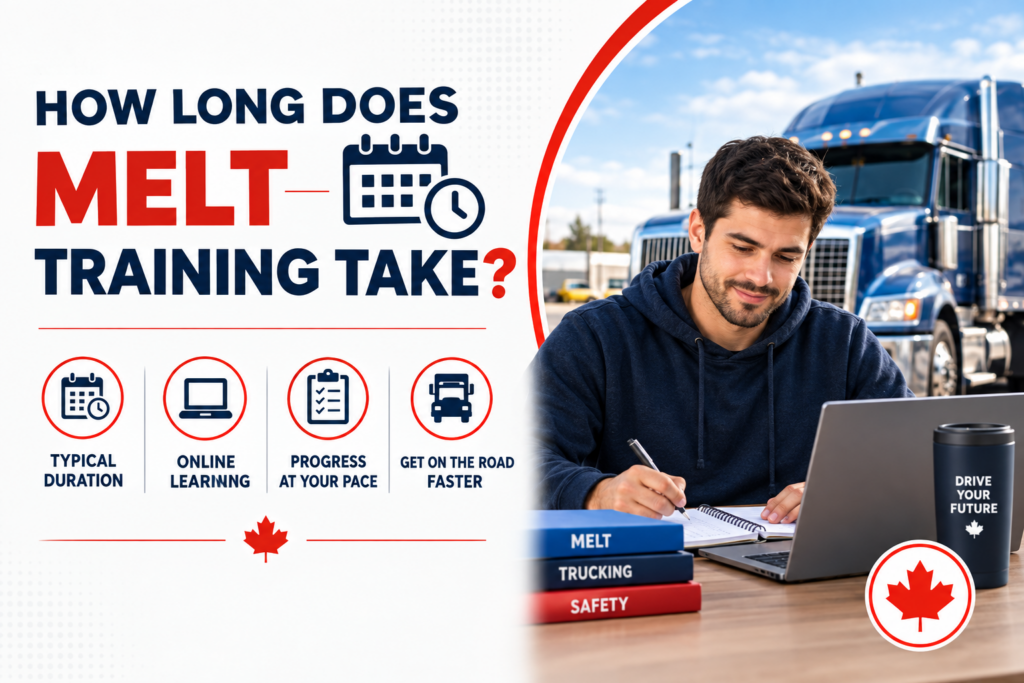
How Long Does MELT Training Take?
The length of MELT training depends on the school and the schedule selected by the student. Full-time programs may be completed in a few weeks, while part-time programs may take longer.
Students should ask the school how many hours of training are scheduled each week and how much direct driving time they will receive. It is also helpful to ask whether road-test preparation, truck rental for the test, and additional practice lessons are included in the program price.
How Much Does MELT Training Cost in Ontario?
The cost of MELT training in Ontario varies depending on the training school, location, class size, equipment, and services included in the package. Some schools include road-test preparation and use of the truck for the road test, while others charge separately for these services.
Before enrolling, students should request a complete written breakdown of costs. This should include tuition, taxes, training materials, truck rental fees, road-test charges, air-brake training, and possible retest costs. Comparing the full package is more useful than comparing only the advertised tuition price.
How to Choose a MELT Training School in Ontario
Choosing the right truck driving school is an important decision. Students should confirm that the provider offers approved Class A MELT training and follows Ontario’s required curriculum.
It is also important to ask how much individual driving time is included. In some programs, students may spend time observing other students drive. Observation can be useful, but it is not the same as direct behind-the-wheel practice.
A good training school should provide clear information about class schedules, instructor qualifications, training vehicles, costs, road-test preparation, and policies for additional lessons. Students should also ask whether the school offers job-search support or connections with trucking employers.
Does MELT Training Guarantee a Truck Driving Job?
MELT training does not guarantee employment, but it helps new drivers meet a key licensing requirement. Employers may consider several factors when hiring new truck drivers, including driving record, road-test performance, communication skills, availability, insurance eligibility, and willingness to work different shifts or routes.
Many entry-level trucking jobs are available to newly licensed drivers, but some employers prefer candidates with additional experience. New drivers can improve their job prospects by maintaining a clean driving record, completing quality training, preparing a professional résumé, and demonstrating a strong safety attitude.
What Is the Difference Between Class A and AZ Licence?
A Class A licence allows a driver to operate qualifying tractor-trailer combinations and other large commercial vehicle combinations. The Z endorsement is related to air brakes.
An AZ licence is the common term used when a driver has both a Class A licence and a Z air-brake endorsement. Most tractor-trailer drivers in Ontario need AZ qualifications because commercial trucks often use air-brake systems.
Common Mistakes to Avoid When Taking MELT Training
One common mistake is selecting a school based only on price. A lower-cost program may include fewer direct driving hours or additional charges for road-test services. Students should compare the full value of each program.
Another mistake is failing to confirm that the program is approved for Ontario Class A MELT requirements. Always ask the school whether the program meets the provincial standard for new Class A applicants.
Some students also focus only on highway driving. While highway driving is important, truck drivers must also master inspections, backing, coupling, uncoupling, turning, and air-brake procedures. These skills are essential for both the road test and real-world trucking work. Contact us for more information.
Frequently Asked Questions About MELT Training in Ontario
Is MELT mandatory for truck drivers in Ontario?
MELT is mandatory for new applicants seeking a full Class A commercial driver’s licence in Ontario. It is not necessarily required for every type of truck-driving job or licence class.
Is MELT required for an AZ licence in Ontario?
Yes, new AZ licence applicants generally need to complete approved Class A MELT training before taking the full Class A road test.
How many hours is MELT training in Ontario?
Ontario requires at least 103.5 hours of Class A MELT training, including classroom, yard, and in-cab instruction.
Can I take the AZ road test without MELT?
No. New Class A applicants must complete MELT training before taking the Ontario Class A road test.
Do existing AZ drivers need MELT training?
Drivers who already held a valid full Class A licence before MELT became mandatory generally do not need to take MELT again.
Conclusion
MELT training is mandatory in Ontario for new drivers applying for a full Class A licence. It is an essential requirement for people who want to obtain an AZ licence and begin a career as a tractor-trailer driver.
The training provides structured instruction in vehicle inspections, air brakes, backing, coupling, defensive driving, and commercial vehicle safety. Before enrolling, choose an approved training provider, compare course details carefully, and make sure you understand the full licensing process.
Durham Truck & Forklift Driving School Ltd is registered under the Ontario Career Colleges Act, 2005. We are one of the Durham region’s most experienced and respected transport driver training schools.