What Is MELT Training and Why Is It Mandatory?
May 27, 2026
Is MELT Training Mandatory in Ontario for Truck Drivers?
June 26, 2026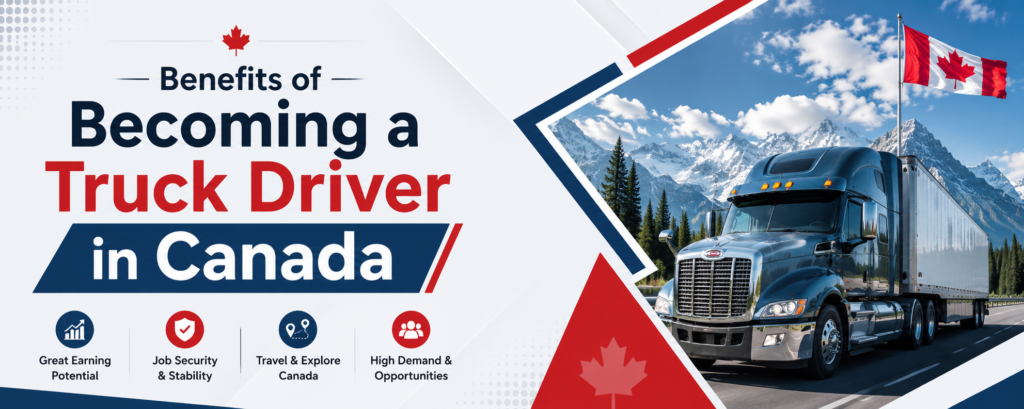
Canada’s economy moves on wheels. From fresh produce crossing provincial borders to construction materials arriving on job sites, commercial trucks are the arteries of the supply chain — and the professionals behind those wheels are in higher demand than ever before. If you are evaluating your career options and looking for a trade with real earning potential, genuine job security, and the freedom of an unconventional workday, trucking deserves a serious look.
Becoming a licensed commercial truck driver in Canada opens doors to opportunities that office careers rarely offer: consistent income, geographic mobility, government-supported training pathways, and the ability to build a long-term career in an industry that is not going to be offshored or automated away anytime soon.
1. High and Growing Demand for Qualified Drivers
Canada is in the middle of a sustained truck driver shortage that shows no signs of resolving soon. The Canadian Trucking Alliance has reported a deficit of tens of thousands of commercial drivers, a gap driven by an aging workforce, increased freight volumes fuelled by e-commerce growth, and the demands of cross-border trade with the United States.
This shortage translates directly into opportunity for anyone entering the profession now. Carriers across every province are actively competing for qualified drivers with signing bonuses, retention incentives, and accelerated career pathways. In a job market where many industries are contracting, trucking is aggressively expanding — and qualified drivers hold considerable negotiating leverage.
2. Competitive and Reliable Income
Truck driving in Canada offers wages that compare favourably with many skilled trades and professional roles that require years of formal education. Entry-level drivers typically earn between $50,000 and $65,000 annually, while experienced long-haul drivers regularly earn $80,000 to over $100,000 per year, particularly those operating owner-operator models or hauling specialized freight.
Many trucking positions also include performance bonuses, fuel efficiency incentives, and overtime pay. Driver pay is not abstract — it is tied directly to kilometres driven or loads delivered, which means motivated drivers have real control over their earnings trajectory. Unlike salaried roles where income growth depends on organizational structure and promotion cycles, trucking rewards consistency and competence in measurable ways.
3. Exceptional Job Security
Freight does not stop moving during economic downturns. Groceries, medical supplies, construction materials, and consumer goods need to reach their destinations regardless of what the broader economy is doing — and trucks handle a dominant share of that movement in Canada. The result is a level of job security that few industries can match.
Even during the disruptions of the COVID-19 pandemic, commercial drivers were classified as essential workers and continued operating throughout. While other sectors faced mass layoffs, trucking companies were struggling to hire fast enough. That essential status reflects how fundamentally the economy depends on commercial transportation — and it makes trucking one of the most recession-resistant careers available.
4. Relatively Fast Entry Into the Workforce
One of the most appealing aspects of a trucking career is how quickly a motivated person can go from starting their training to earning a full professional income. Unlike university or college programs that require three to four years of study before entering the workforce, a commercial driver’s licence in Canada can be obtained in a matter of weeks to a few months depending on the province and licence class pursued.
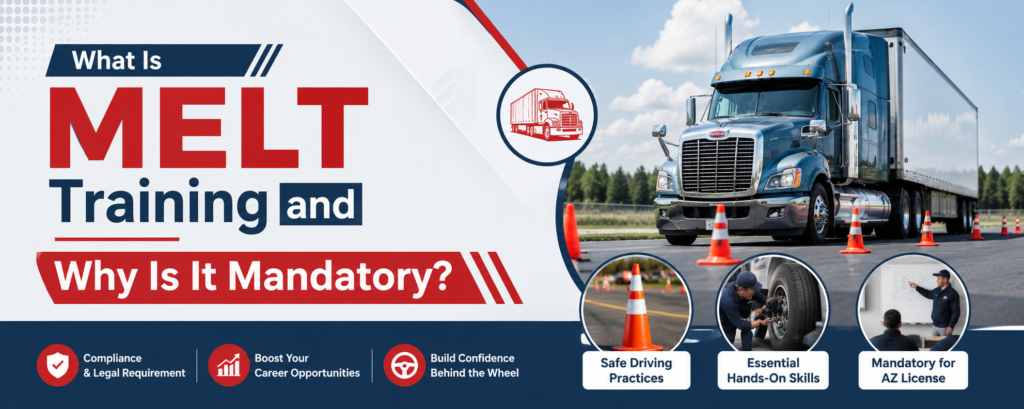
With the introduction of mandatory MELT programs across Canada’s provinces, the training pathway is now standardized and rigorous — but it remains significantly faster and more affordable than most post-secondary education routes. At Durham Truck Training, our Tractor-Trailer M.E.L.T. program meets all Ontario ministry requirements and prepares you for your road test with a combination of in-class and behind-the-wheel instruction. Many employers also offer sponsored training programs where they cover your licensing costs in exchange for a commitment period with the company, meaning you can launch your career without accumulating significant debt.
5. Independence and Autonomy at Work
For individuals who find conventional office environments stifling, truck driving offers a fundamentally different working experience. Long-haul drivers in particular spend the majority of their working hours as the sole person in their cab — setting their own pace within the structure of delivery schedules, managing their route, and operating with a degree of daily independence that is rare in most professions.
Even company drivers working regular regional routes enjoy a level of autonomy that most employees do not. Your office is your cab, your hours are structured but flexible, and the social dynamics of a traditional workplace are largely absent. For independent thinkers who work well without constant supervision, this environment is genuinely appealing.
6. Opportunity to See Canada
Long-haul trucking takes drivers through some of the most scenic landscapes on the continent — the Rocky Mountains of British Columbia, the vast prairies of Saskatchewan, the river valleys of Quebec, the Maritime coastline. Drivers who haul cross-border freight into the United States gain exposure to an even broader geography.
For individuals who find meaning in movement and variety, trucking provides it built into the job description. Every week looks different, every route offers new scenery, and the experience of navigating Canada’s highways gives drivers a relationship with the country’s geography that most Canadians never develop.
7. Pathways to Business Ownership
Trucking is one of the most accessible industries for entrepreneurship in Canada. Many drivers transition from company employment to owner-operator status — purchasing their own truck and either contracting with a carrier or operating independently. This shift substantially increases earning potential while also introducing the responsibilities and rewards of running a small business.
Beyond solo ownership, some drivers eventually build small fleets, employing other drivers and scaling their operations. The capital requirements for entry-level owner-operation have dropped significantly with the availability of equipment financing, and carriers are increasingly welcoming owner-operators as a flexible solution to their capacity needs. The path from employee to business owner in trucking is well-established and well-supported. Our AZ Driver Program is specifically designed to get you licence-ready and employer-ready in the most direct path possible.
8. Benefits, Pensions, and Union Representation
Many of Canada’s largest trucking employers offer comprehensive benefits packages including extended health and dental coverage, group life insurance, and employer-matched pension contributions. Unionized driving positions — particularly those with municipal governments, utilities, and major carriers — provide additional protections around scheduling, overtime rates, grievance procedures, and seniority-based advancement.
Drivers employed by school boards, transit authorities, and government agencies often enjoy public-sector benefits that are among the most comprehensive available anywhere in the Canadian labour market. These positions combine the practical accessibility of trucking with the long-term stability of public employment.
9. Transferable Skills Across Multiple Sectors
Commercial driving skills transfer across an enormous range of industries. A driver with a Class 1 licence and clean abstract can work in agriculture, construction, mining, oil and gas, municipal services, emergency response logistics, and military supply chains. This versatility means that truck drivers are not locked into a single employer or sector — the credential opens multiple doors across the economy.
Drivers who develop specialized skills increase their earning potential and employability even further. Adding a Transportation of Dangerous Goods (TDG) certification to your résumé, for example, opens access to higher-paying hauls in sectors like chemicals, fuel, and industrial materials. In trucking, professional development compounds into higher wages and broader options over the course of a career.
Conclusion: The Road Ahead Looks Promising
Becoming a truck driver in Canada means stepping into a profession with genuine demand, strong compensation, and a career trajectory that rewards experience and initiative. It is accessible without a university degree, scalable into business ownership, and underpinned by the inescapable reality that goods will always need to move.
If you are ready to invest a few months in the right training — including MELT certification as now required in most provinces — explore our full course offerings at Durham Truck Training and take the first step toward a career that provides financial stability, professional independence, and a relationship with your country that very few jobs can offer.
Durham Truck & Forklift Driving School Ltd is registered under the Ontario Career Colleges Act, 2005. We are one of the Durham region’s most experienced and respected transport driver training schools.